
(And why the problem isn’t your discipline—it’s the entire premise)
The Lie You’ve Been Sold (And Probably Downloaded)
Somewhere between your third attempt at “getting your life together” and your fifth abandoned app, you’ve been sold a very convenient lie:
That your financial problems can be fixed with better color-coded categories.
That if you just track your coffee purchases with enough precision, your bank account will magically stop looking like a crime scene.
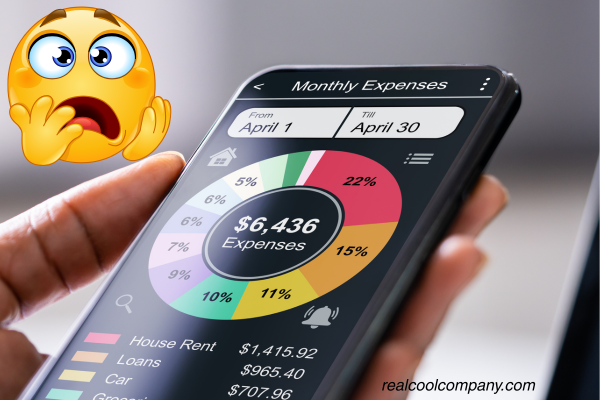
That the difference between you and financial stability is… a pie chart.
Meanwhile, Instagram coaches are posting screenshots of perfect dashboards. TikTok influencers are swiping through aesthetic budgeting apps like it’s a skincare routine. Online gurus swear that once you “become aware of your spending,” everything changes.
Sure. And if awareness alone worked, nobody would ever eat junk food again.
Let’s be honest:
Most people don’t fail at budgeting because they don’t have an app.
They fail because apps solve the least important part of the problem.
And no one wants to say that out loud because there’s a lot of money in pretending otherwise.
The Problem With Budget Apps (That No One Mentions)
Budget apps aren’t useless. They’re just wildly misunderstood—and massively oversold.
Here’s where things go sideways.
1. They Turn Financial Strategy Into Financial Surveillance
Most budgeting apps are built around tracking. Categorizing. Monitoring.
Translation: watching your money like a paranoid accountant.
You log expenses. You check graphs. You review trends. You feel productive.
But here’s the catch:
Tracking doesn’t change behavior.
It just documents it.
Knowing you spent $437 on “Dining Out” doesn’t stop you from doing it again next month. It just gives you a slightly more detailed record of your bad habits.
That’s like weighing yourself after every meal and calling it a fitness plan.
2. They Rely on Motivation (Which Is Inherently Unreliable)
Budget apps assume you’ll keep using them.
Daily. Weekly. Consistently.
That’s adorable.
Most people abandon budgeting apps within a few weeks—not because they’re lazy, but because the process is tedious and offers zero immediate reward.
You’re doing work… to confirm you’re not where you want to be.
That’s not motivating. That’s demoralizing.
Apps don’t solve this. They amplify it.
3. They Focus on Micro Decisions Instead of Macro Strategy
Budget apps obsess over small purchases.
Coffee. Subscriptions. Groceries.
But the real financial needle movers are:
- Income
- Housing
- Transportation
- Taxes
- Investments
No one ever built wealth by perfectly categorizing their $6 lattes while ignoring a $20,000 income gap.
But micro-control feels productive, so apps lean into it.
Because it’s easier to sell “cut back on coffee” than “increase your earning capacity and restructure your life.”
4. They Create the Illusion of Control
This one’s subtle—and dangerous.
When you’re actively budgeting, it feels like you’re in control.
You’re engaged. Organized. “On top of things.”
But if nothing actually changes—your income, your systems, your habits—you’re just managing chaos more efficiently.
It’s like reorganizing a messy closet without throwing anything away.
Everything looks better.
Nothing is actually better.
Why This Advice Spreads (Even Though It Doesn’t Work)
If budget apps are so ineffective for most people, why are they everywhere?
Simple.
They’re easy to sell.
1. They’re Non-Threatening
“Download this app” is comfortable advice.
It doesn’t challenge your lifestyle.
It doesn’t force hard decisions.
It doesn’t require uncomfortable change.
Compare that to:
- Changing careers
- Cutting major expenses
- Saying no to social spending
- Learning new skills
Not exactly viral content.
2. They Produce Quick Wins (That Don’t Last)
The first week of using a budget app feels great.
You’re organized. Disciplined. In control.
Then reality kicks in.
You miss a few entries.
The numbers drift.
You stop checking.
And suddenly, the “system” disappears.
But that initial high? That’s what gets marketed.
3. They Monetize the Problem Without Solving It
Apps don’t need you to succeed.
They need you to download, engage briefly, and maybe subscribe.
Your long-term financial outcome isn’t the business model.
Your attention is.
The Real Cool POV: Stop Managing Money—Start Designing It
Here’s the part that doesn’t trend on social media:
Financial success has very little to do with tracking—and everything to do with structure.
You don’t need more awareness.
You need better systems.
Let’s break that down.
Strategy Over Hype
You don’t need a prettier interface.
You need a plan that answers:
- How much should I be earning?
- Where should my money actually go?
- What am I optimizing for—comfort, growth, freedom?
Without strategy, budgeting is just guessing with better graphics.
Planning Over Motivation
Motivation fades. Systems don’t.
If your financial life requires daily discipline to function, it’s broken.
Good systems remove decisions.
They automate the right behavior.
They make the wrong behavior inconvenient.
Systems Over Shortcuts
There is no financial hack.
No trick. No shortcut. No viral method.
Just:
- Earn more
- Spend intentionally
- Invest consistently
- Repeat for a long time
Not sexy. Not clickable. But it works.
Discipline Over Dopamine
Budget apps are built for engagement.
Real financial progress is built on repetition.
You don’t need a hit of productivity.
You need boring consistency.
What Actually Works (But No One Wants to Talk About)
Let’s get practical.
Here are strategies that work in real life—without the fluff.
1. Build a “Default” Financial System
What it is:
Automate your money so decisions are minimized.
How it works:
- Income hits your account
- Fixed % automatically moves to savings/investing
- Bills are automated
- Remaining money is guilt-free spending
Why it works:
It removes willpower from the equation.
You don’t need to “be good” with money.
The system handles it.
Why gurus ignore it:
It’s not exciting. There’s no app addiction loop. It doesn’t generate daily engagement.
2. Focus on Increasing Income First
What it is:
Treat income growth as your primary financial lever.
How it works:
- Learn high-value skills (sales, marketing, tech, negotiation)
- Change roles or industries strategically
- Add income streams that actually scale
Why it works:
Cutting $200 in expenses helps once.
Increasing income by $2,000/month changes everything.
Why gurus ignore it:
It’s harder to teach and takes longer. “Cut your spending” is easier content.
3. Design Your Life Before You Budget It
What it is:
Decide what matters first—then align spending.
How it works:
- Choose priorities (travel, home, flexibility, status, etc.)
- Cut ruthlessly where you don’t care
- Spend confidently where you do
Why it works:
Clarity eliminates guilt and confusion.
You stop trying to optimize everything—and start optimizing what matters.
Why gurus ignore it:
It requires independent thinking, not templates.
4. Think in Decades, Not Paychecks
What it is:
Zoom out.
How it works:
- Invest consistently (even small amounts)
- Avoid lifestyle inflation as income grows
- Let compounding do the heavy lifting
Why it works:
Time—not hacks—is the real advantage.
Most people sabotage themselves by chasing short-term wins.
Why gurus ignore it:
“Wait 10–20 years” doesn’t go viral.
5. Eliminate Friction for Good Decisions
What it is:
Make the right actions easier than the wrong ones.
How it works:
- Separate accounts for spending vs saving
- Auto-invest before you see the money
- Use “friction” for bad habits (like manual transfers)
Why it works:
Behavior follows convenience.
Not intention.
Why gurus ignore it:
It’s subtle, not flashy. But it’s incredibly effective.
6. Stop Obsessing Over Small Expenses
What it is:
Focus on the big levers.
How it works:
- Negotiate salary
- Reduce major fixed costs
- Optimize taxes and investments
Why it works:
One big decision outweighs hundreds of small ones.
Why gurus ignore it:
You can’t build a brand around “make fewer, bigger decisions.”
The Real Reason You “Failed” at Budgeting
You didn’t fail.
You were given the wrong tool for the job.
Budget apps treat money like a tracking problem.
It’s not.
It’s a design problem.
A systems problem.
A decision-making problem.
And no amount of color-coded categories is going to fix that.
The Mic Drop (Because It Needs to Be Said)
Budget apps don’t fail because they’re bad.
They fail because they’re solving the least important part of your financial life.
You don’t need to know where your money went.
You need to decide where it’s going—before it ever gets there.
And if your entire financial strategy depends on manually tracking every dollar…
You don’t have a system.
You have a hobby.
One that looks productive, feels responsible, and quietly keeps you stuck in the exact same place.
But hey—at least the charts look nice.